24/7 Emergency Towing in Waterloo, IA: What to Expect When You Call a Towing Service
Knowing what happens after you call for emergency towing in Waterloo, IA, can reduce stress and help you stay safe until help arrives. Whether you are stranded on I-380, stuck along US-63, or broken down in a neighborhood near downtown, having a reliable towing service in Waterloo, IA, can make all the difference in how quickly you get back on the road. This guide walks you through every step of the process, from the moment you dial to the moment your vehicle is safely moved.
What Happens the Moment You Call for Emergency Towing
A trained dispatcher answers your call and begins gathering the information needed to get a truck to you fast. The dispatcher will typically ask for your exact location, the type of vehicle you have, and a brief description of what went wrong. Being ready with that information speeds up the process considerably.
Here is what to have on hand before you call:
- Your exact location, including the nearest highway exit, cross street, or landmark.
- Your vehicle's year, make, model, and color.
- A brief description of the problem, such as flat tire, engine failure, or accident damage.
- Whether your vehicle is in a travel lane, on a shoulder, or off the road.
Once the dispatcher has what they need, a truck is assigned and sent your way. You may receive an estimated arrival window at that point.
How Long Does a Tow Truck Take to Arrive in Waterloo?
Response times can vary based on your location, time of day, weather, and how many calls are active at that moment. Waterloo sits at the intersection of I-380 and US-20, two major corridors that see high traffic volume and weather-related incidents, especially during Iowa winters. US-63 runs through the city as well, serving both residential areas and the industrial zones near Sergeant Road.
Ongoing construction along portions of I-380 in 2026 may affect shoulder access and lane availability, which can slow both your ability to pull over safely and a tow truck's ability to reach you. Calling as early as possible gives the dispatch team the best chance of routing a driver to you efficiently. Choosing a towing service in Waterloo, IA, that knows these local roads well means faster routing and fewer delays when conditions are difficult.
What to Do While You Wait Roadside
Staying safe while you wait is just as important as making the call. Iowa law requires drivers approaching a stationary emergency or tow vehicle on a shoulder to move over one lane when safely possible, or slow down significantly. That law protects you, so use it to your advantage by making your vehicle as visible as possible.
Follow these steps while waiting:
Pull as far off the roadway as conditions allow, using the shoulder or an exit ramp.
Turn on your hazard lights immediately.
Place emergency triangles or road flares at least 100 feet behind your vehicle if you have them.
Exit through the passenger side if traffic is passing on the driver's side.
Wait behind a guardrail or on an embankment rather than standing next to your vehicle.
Keep your phone charged and accessible so the driver can reach you for updates.
If you are on a high-speed stretch of I-380 or US-63, staying inside your vehicle with your seatbelt fastened may be safer than standing outside, depending on the shoulder conditions around you.
What Kind of Towing Service Will You Need?
Not every roadside problem requires a tow. A towing service in Waterloo, IA, can often resolve flat tires, dead batteries, lockouts, and empty fuel tanks through roadside assistance without moving your vehicle at all.
You will likely need a full tow if your vehicle has:
Engine failure or overheating that cannot be resolved on-site.
Transmission or drivetrain damage that makes driving unsafe.
Collision damage affecting steering, suspension, or tires.
A mechanical issue that leaves the vehicle completely immobile.
The dispatcher may ask you enough questions to determine which service applies before the truck ever leaves. Answering accurately helps ensure the right equipment arrives the first time.
What to Expect When the Tow Truck Arrives
A professional driver will assess your vehicle and confirm the destination before loading it. If your vehicle needs to be transported to a specific repair shop or dealership in the Waterloo area, let the dispatcher know when you call so arrangements can be made ahead of time.
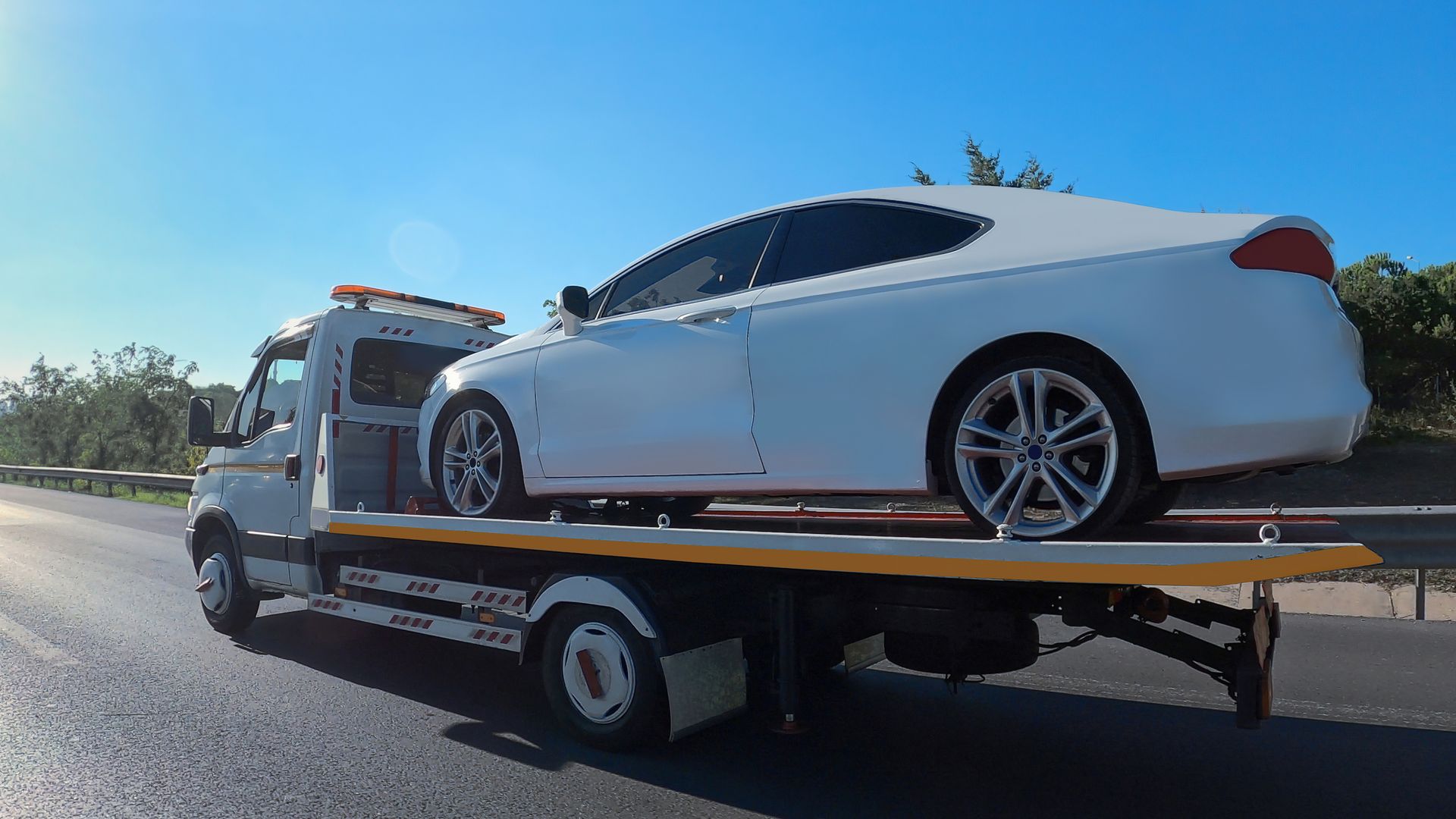
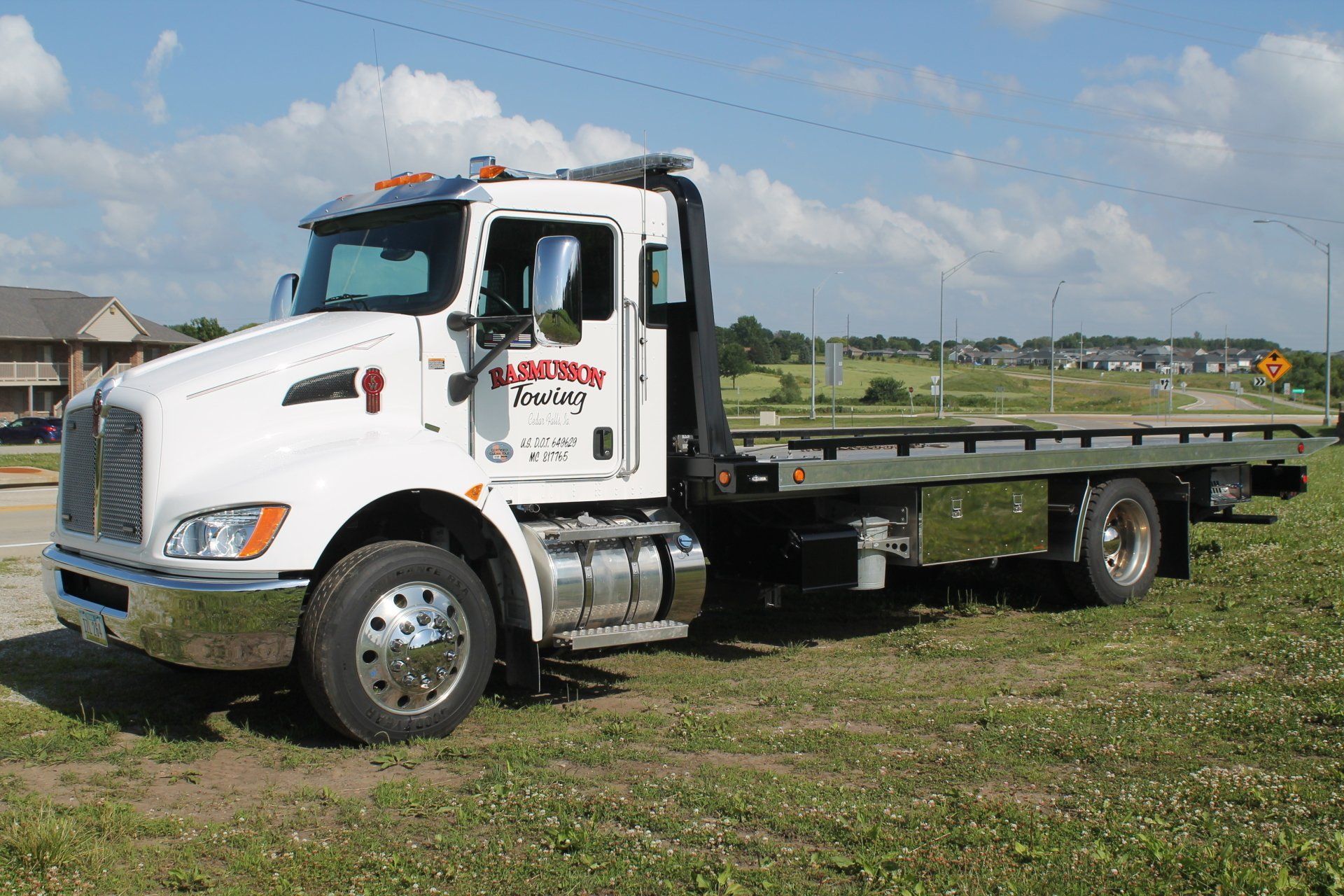
Flatbed tow trucks are commonly used for vehicles with drivetrain damage, all-wheel drive vehicles, or cars involved in accidents. Wheel-lift or hook-and-chain methods may be used for other situations. The driver will explain what method they are using and why.
Once your vehicle is secured, you will typically be offered a ride in the cab of the tow truck to your destination. Confirm this option when you call so there are no surprises. Working with a trusted towing service in Waterloo, IA, means you can expect clear communication and professional handling from arrival through drop-off.
Ready When You Need a Towing Service in Waterloo, IA
When a roadside emergency hits, you want a team that knows the Cedar Valley area and can respond any time of day or night. Rasmusson Towing has been serving drivers with 24/7 towing, recovery, and roadside assistance since 1920. Whether you are off I-380, along US-63, or anywhere in the greater Waterloo region, Rasmusson Towing is ready to help.
Call (319) 277-3802 any time for immediate dispatch, or visit our towing services page to learn more. You can also contact us online to request non-emergency service or ask questions about what to expect.